







Party Ideas
Table Football Balls: How to Choose the Right Ones

You’ve brought home a foosball table, unpacked the accessories, and after just a few games something feels off. The ball sticks near the figures, bounces unpredictably off the rails, and the surface scuffs quickly. The problem usually isn’t the table or the players’ technique, it’s the wrong ball.
Table football balls aren’t all the same. Size, material, surface grip, and weight all affect the pace of play, control, shot accuracy, and even how much noise the game makes in the room. When choosing, it’s worth starting not with “which model is best,” but with a far more practical question: which ball suits your specific table and the players’ skill level?
Table of Contents
- Why the right ball changes the whole game
- Main types of balls by purpose
- Material and surface properties
- How to match a ball to your table
- How ball properties affect game speed
- Care and durability
- What to buy for your scenario
Why the right ball changes the whole game
Buyers often rely on whatever ball comes included in the set. That’s understandable, but the bundled ball isn’t necessarily the best fit for your table. It may be too light, too slippery, or the wrong diameter. At first the difference seems small, but after a few games it becomes obvious.
The ball determines three important things:
- Pace control. A slippery, lightweight ball flies across the pitch quickly, but bounces off the rails more often and is harder to stop after a pass.
- Shot accuracy. Better grip lets you control the ball under the figure more precisely, make short passes, and keep it closer to the playing surface.
- Overall playing experience. The wrong model forces the player to fight the equipment instead of improving their technique.
Rule of thumb: if the ball keeps sticking, jumps out of the play zone too often, or rolls unpredictably, check its size and surface first, before you consider changing the table.
It’s important to distinguish speed from quality. A fast-moving ball isn’t necessarily better. For a beginner it can be too hard to control, and for kids or family play too much slipperiness will just get in the way. Most casual players benefit more from a steadier model that makes it easier to learn to stop, pass, and direct the ball.
Organized table football in Lithuania has a fairly recent history, but the Lithuanian national team has competed in international tournaments since 2008, and that same year Lithuania reached 15th place in the ITSF ranking. The under-18 juniors have also become world champions. These facts, described in the overview of table football’s development in Lithuania, show that choosing the right equipment matters not only for casual play but also for more serious training.
Main types of balls by purpose
Choose the type of ball based on the table’s purpose and the players’ experience. A casual home table doesn’t need a tournament-grade model, and training doesn’t always call for the lightest plastic ball available.
For everyday play, 35–36 mm plastic balls are the most common choice. They’re designed for standard-size tables, family entertainment, home game rooms, and casual matches. This is the option I’d recommend to most buyers who want a reliable, easily replaceable ball.
Tournament models are aimed at players who care about fast pace and precise compliance with competition equipment standards. ITSF-approved balls are used in international competitions, so they’re worth choosing when training needs to replicate competitive play as closely as possible. For casual play, this purchase is usually unnecessary.
Balls designed for children should be considered carefully. The Lithuanian market clearly favors 32 mm balls for smaller-than-standard tables, but you should always check a specific product’s description against your table’s manual. A larger ball isn’t necessarily easier to control if the table’s openings and gaps between figures weren’t designed for it.
| Type | Size | Weight | Best for |
|---|---|---|---|
| Everyday casual | 35–36 mm | Medium | Home and entertainment tables |
| Tournament | Per the specific table and tournament specification | Lighter or specially balanced | Advanced players and training |
| Kids and smaller tables | 32 mm | Usually lighter | Compact and children’s models |
Weight matters just as much as diameter. A heavier ball generally moves more steadily, while a lighter one accelerates faster. If the table is for the family, choose control and durability. If a player is training for a specific competitive style, follow the table and equipment specifications, which are also worth comparing with other buying guides.
Material and surface properties
A ball’s material shapes its behavior before the first shot is even taken. A hard, smooth surface gives more speed, while a rougher coating helps maintain control. So diameter alone isn’t enough.
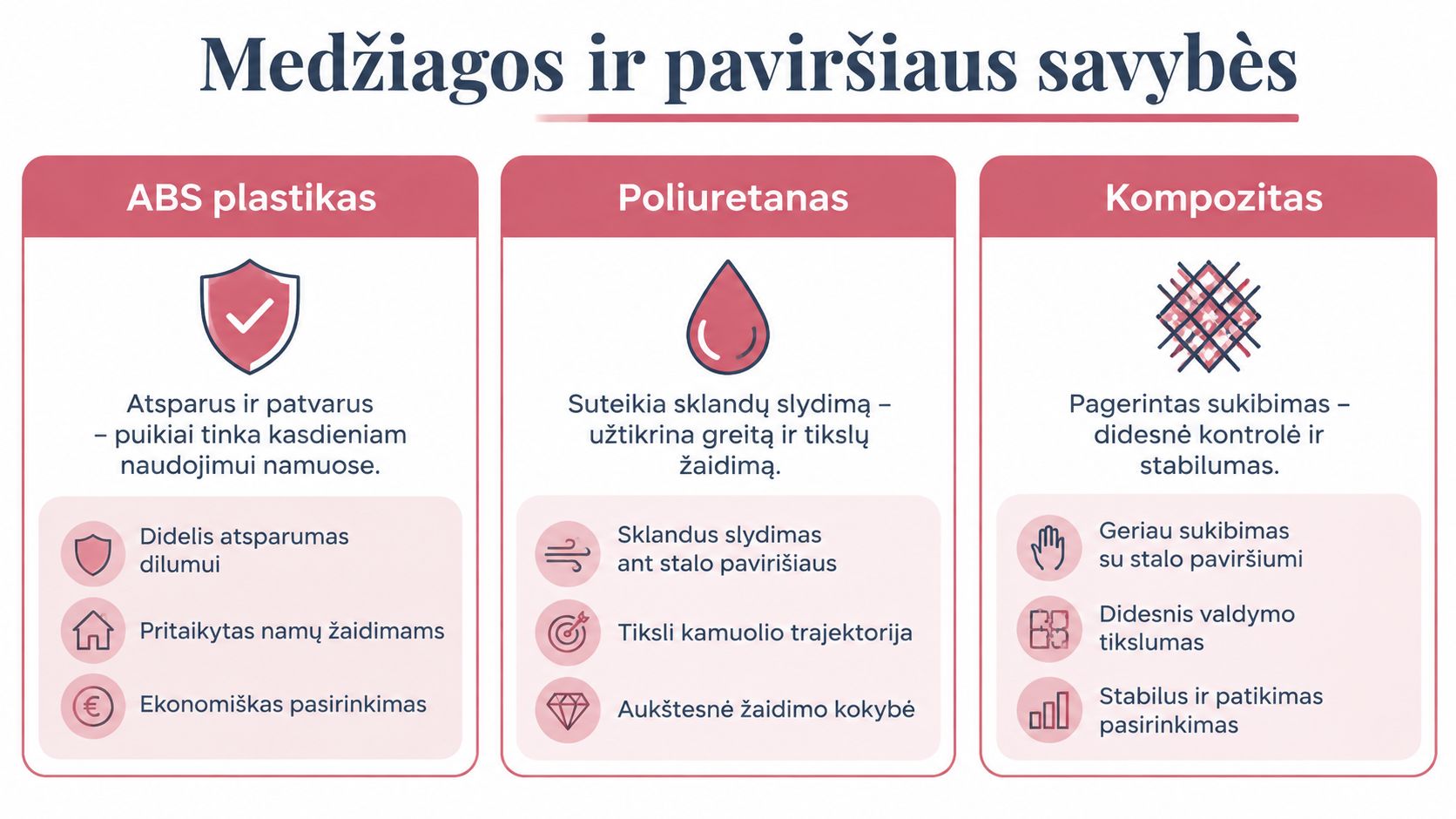
ABS plastic is a practical choice for home use. It’s sturdy, impact-resistant, and suited to tables that see regular play. If the ball will be used by kids, guests, or the whole family, a durable material matters more than maximum speed.
Polystyrene, or PS, is often chosen for its lower price and light weight. It can work for occasional casual play, but the surface generally wears and scuffs faster. I’d only choose this option when the lowest purchase price matters more than long-term durability.
Hollow plastic delivers a fast pace of play. It’s light, reacts quickly to a shot, but can be harder to control after a bounce. For tournament play or reaction training, that can be an advantage, but beginners are usually more comfortable with a steadier ball.
Choosing a surface is straightforward:
- A smooth surface slides quickly and suits players who already know how to control the pace.
- A rough or matte surface provides more grip, so I’d recommend it for kids and beginners.
- A textured surface is a middle ground, when you want both speed and more reliable control.
Descriptions from suppliers operating in Lithuania mention polypropylene Garlando balls, well-controlled and grippy Bonzini models, and ITSF-approved tournament variants. Specialized ball listings also note that some models contain small metal pieces that can be heard during play. That can be useful if you want to clearly hear the ball moving, but in the evening at home that sound won’t suit everyone.
How to match a ball to your table
Compatibility starts with measurement, not color or price. The most common table football ball sizes on the Lithuanian market are 32 mm and 35–36 mm. 32 mm balls are designed for smaller and children’s tables, while 35–36 mm models, as noted in a local specialized retailer’s range, are meant for standard-size tables.
First, determine your table’s class
Check the table’s manual, the manufacturer’s label, or the original set’s description. If that information isn’t available, measure a ball you already have with calipers. A regular ruler can also help you get a rough idea, but a precise measurement is more useful when the ball keeps sticking.
If a 35–36 mm ball barely fits between the figures, catches in the corners, or struggles to enter the return chutes, it may be too large. If the ball slips freely through the gaps, bounces unpredictably, or rolls off the rail too quickly, it’s likely too small or too light for the table.
Check three spots
- The playing field gaps. The ball shouldn’t get stuck between the figures and the rails.
- The return chutes. The ball should enter the chute freely, without disappearing too soon or getting caught.
- The table manufacturer’s specification. The generic term “standard” isn’t enough, since different manufacturers’ tables can be designed for different balls.
| Ball diameter | Table type it suits | Weight | Recommended player |
|---|---|---|---|
| 32 mm | Compact and children’s tables | Lighter | Kids and beginners |
| 35–36 mm | Standard-size home or commercial tables | Medium | Casual players and family play |
| Other size, per manufacturer | Non-standard or specially built tables | Depends on the model | Players who follow the table’s manual |
If you’re buying a table for a kids’ party, its dimensions and the ball size need to be matched up in advance. For the game area, it can also be nice to add themed table decor, such as football-themed plates, but those won’t override the main rule: the ball has to fit the mechanics.
How ball properties affect game speed
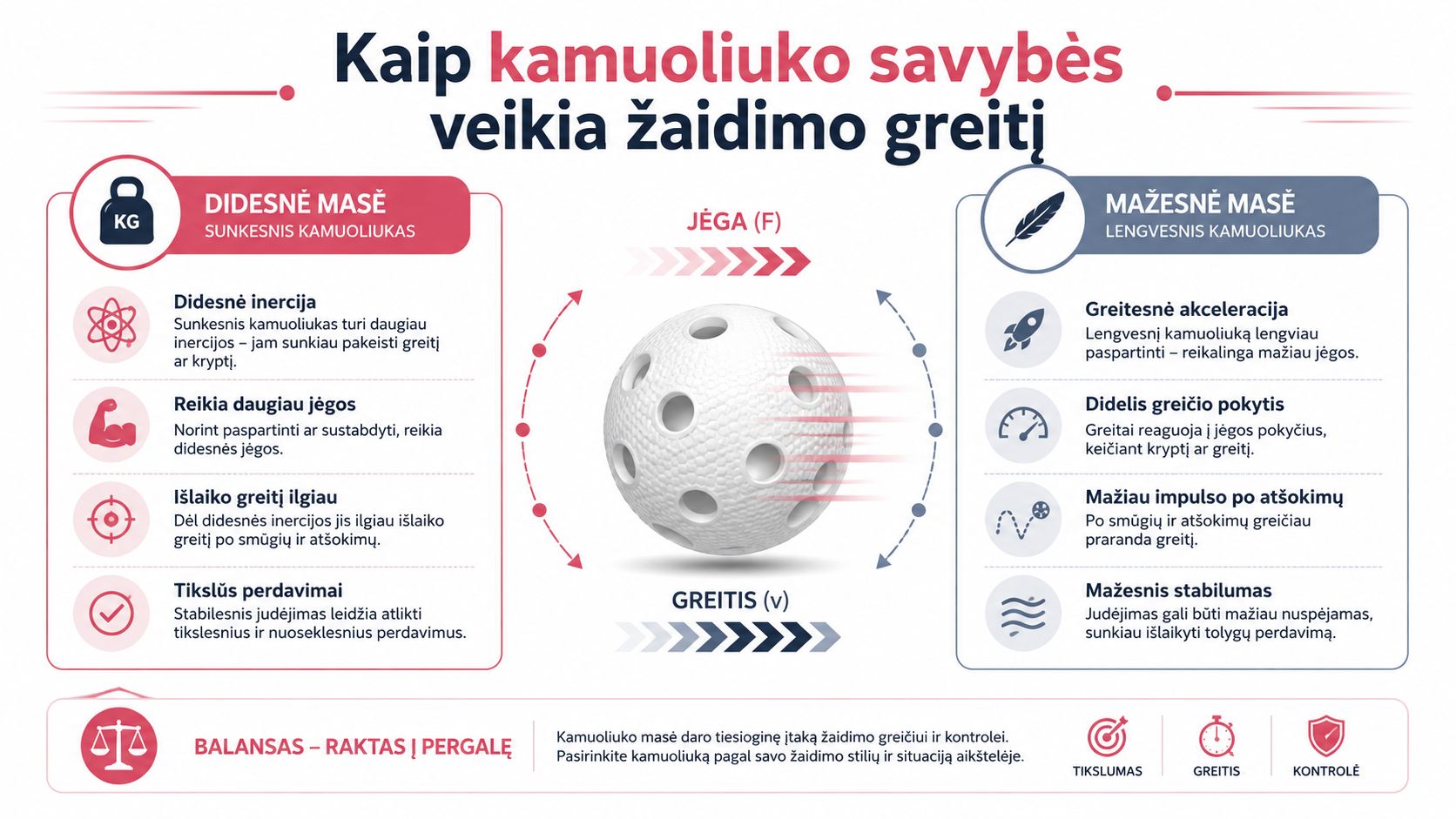
Weight changes how the ball reacts to a shot and a bounce. A heavier model needs more force but moves more steadily and holds its direction better after contact with the rail. As a result, passes become more consistent, and the player has more time to anticipate the next move.
A light plastic ball accelerates quickly. It gives a livelier pace but can bounce around more and be harder to stop after a shot. For a beginner this behavior is often a hindrance, while an experienced player may find it useful for training reaction speed.
Game style choice: for speed, choose a smoother, lighter surface; for control, short passes, and learning, choose a rougher coating.
Surface grip affects the friction between the ball and the playing field. Smooth ABS plastic generally lets the ball slide faster. A textured or matte surface reduces slipping and gives you more ways to stop it under a figure. Compromise models suit players who want neither an overly slow nor an uncontrollably fast game.
Acoustics aren’t a minor detail either. Harder balls produce a sharper sound, while softer, grippier models tend to sound quieter. At home, especially in the evening, it’s worth considering not just the pace of play but also whether the noise will bother anyone else.
Care and durability
Caring for a ball is simple, but it directly affects how it behaves on the table. Dust, grease, and small particles of dirt change the surface grip, so the ball can start sliding differently than it did on the day you bought it.
Proper storage
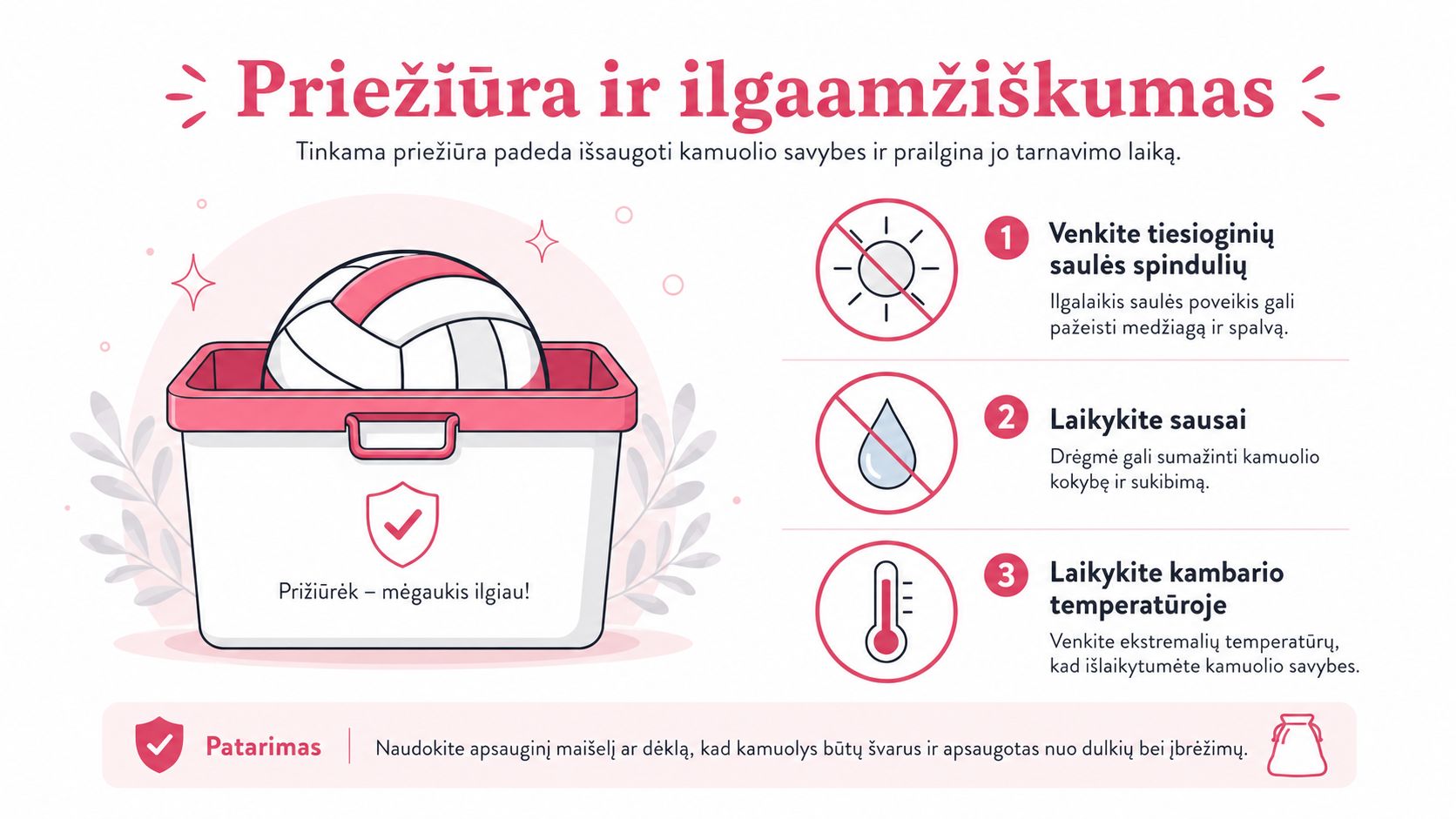
Store balls in a dry place, at room temperature, away from direct sunlight. Plastic surfaces can lose their original properties from prolonged heat and light exposure, and materials more sensitive to moisture can warp.
After playing, don’t leave balls on a damp table or in a bag that doesn’t close, where dirt can build up. It’s best to keep a separate box or pouch so the balls don’t rub against other accessories or fall onto a hard floor.
Cleaning and inspection
For cleaning, use a soft, slightly damp microfiber cloth. Don’t use abrasive cleaners, rough sponges, or harsh solvents, as they can scratch the surface and change how the ball slides.
Inspect the ball before more intensive play. Dents, cracks, unevenness, or a heavily worn surface mean it will already be getting in the way of the game. A damaged ball can not only roll unevenly but also wear down the table’s rails faster.
A simple solution: keep a spare set next to the table. It costs less than an interrupted family match or an event you weren’t ready for.
There’s no single universal replacement schedule. Frequent play reveals surface wear sooner, while a rarely used ball can stay in good condition much longer. Decide based on actual condition, not color or age alone.
What to buy for your scenario
Different uses call for different balls. The same model that suits an experienced player might frustrate kids, while a cheap ball chosen for a family table can quickly lose its shape.
Kids’ birthdays and family games
Choose 32 mm balls if the table is compact or made for children. If the table takes a standard size, choose a 35–36 mm model with a grippier, not overly hard surface. A brighter color helps kids track the ball’s path, especially when several people are playing and the ball keeps changing direction.
Home bar and entertainment area
Here, durability and consistent behavior matter most. I’d recommend a sturdy ABS plastic ball matched to a standard-size table. A single-color model looks tidy, while a multicolor set is handy when different groups of players use the balls.
School, club, or youth center
In this setting, it’s worth choosing balls of the same size and material. Different models on the same table move inconsistently, making it harder for players to learn and compare results. Prioritize durable, casual-grade balls that are easy to clean and replace.
Tournaments and serious training
For advanced players, I’d recommend an ITSF-approved model, provided it matches the specific table and competition requirements. Buy based on the table manufacturer, tournament rules, and surface properties, not a generic description. Keep competition balls stored separately from everyday-use ones.
Before adding an item to your cart, answer three questions:
- What’s my table? 32 mm or 35–36 mm, compact or standard?
- Who will be playing? Kids, family, guests, a school group, or experienced players?
- How often will we play? Occasionally for fun, or regular training?
If you’re planning a football-themed birthday party, you can round out the game area with football-themed plates as well, but the choice of ball should still be guided by the table’s size, not the event decor.
At Festive.lt you’ll find decorations, balloons, and tableware for kids’ birthdays and themed parties, easy to match to a football or sports theme. Visit Festive.lt, choose the products that fit your party scenario, and get everything ready for your event in one place.
 Table Decorations
 Party Accessories
 Christmas Costumes